Meet the Baboons
The Baboon is one of the world’s largest and most powerful monkeys, recognized for its dog-like snout, sharp canine teeth, and thick fur. Native to Africa and parts of the Arabian Peninsula, baboons are highly adaptable and thrive in a variety of environments, from savannas to rocky deserts and forests.
At Beavers Bend, you can now encounter two distinct species:
Hamadryas Baboon – Known for their striking silver-white coats and the males’ impressive mane or “cape.” They have long been celebrated in history, even revered in ancient Egypt.
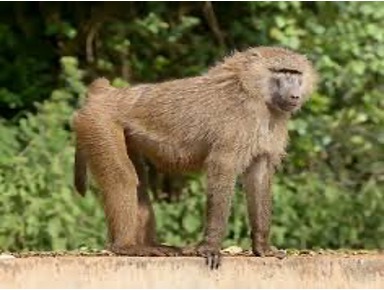
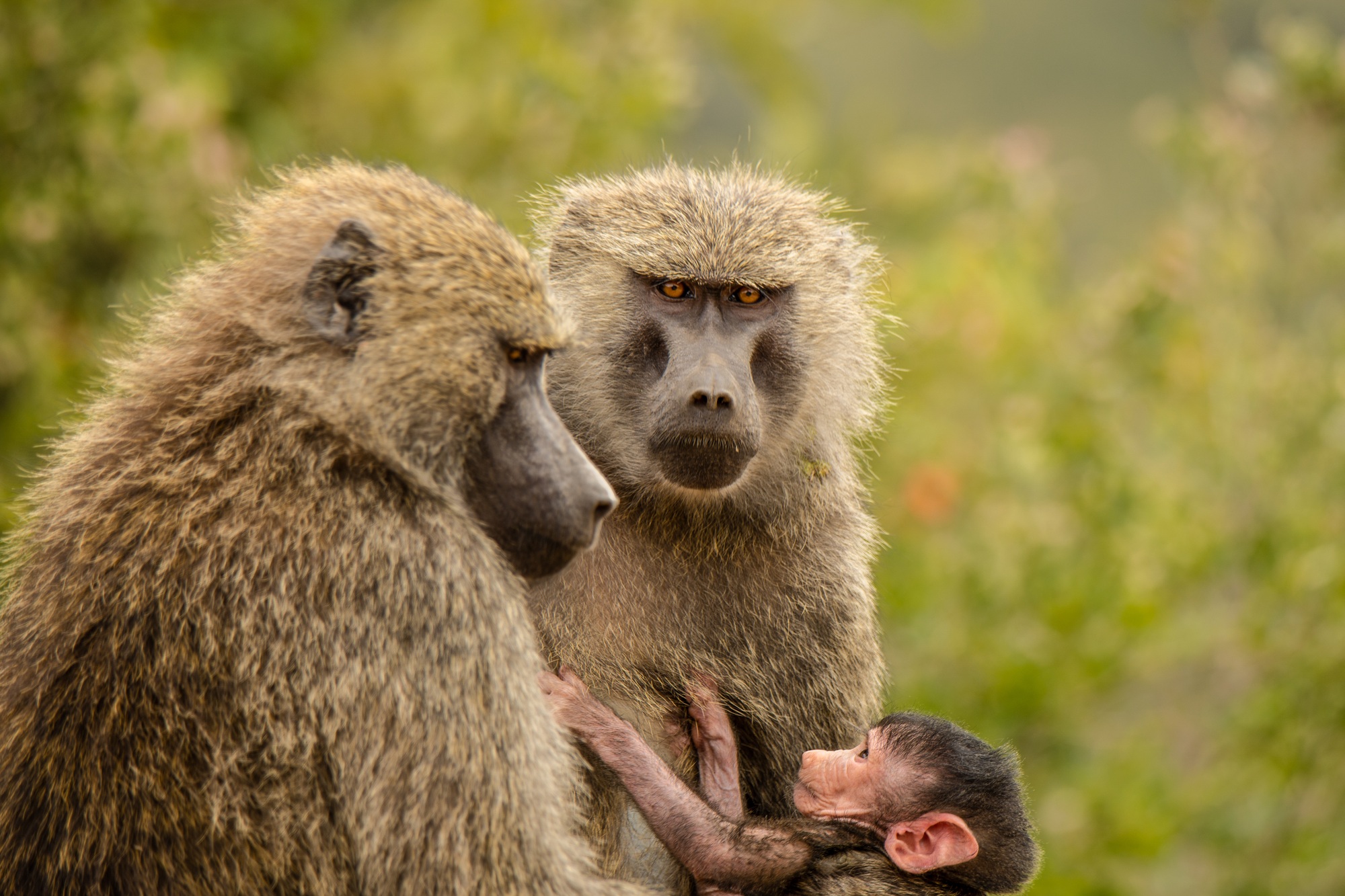
Olive Baboon – Recognized by their greenish-grey fur and robust build. Olive baboons are the most widespread species in Africa and are highly versatile in both diet and habitat.
Both species live in complex social groups called troops, where they communicate through vocalizations, facial expressions, and body language. While primarily eating fruits, seeds, and insects, they are opportunistic feeders and will sometimes hunt small animals.
With their keen problem-solving skills and strong social bonds, baboons display some of the most intricate group behaviors in the primate world. Despite their sometimes fierce reputation, they play a crucial role in their ecosystems and continue to fascinate researchers and wildlife enthusiasts alike.
Located in the small animal walkabout
About Baboons
| Conservation Status | Least Concern |
| Height | 2.3 ft |
| Weight | 44 – 82 lbs |
| Diet | These monkeys are omnivorous and will eat just about anything edible. Grass makes up a large part of their diet, along with berries, seeds, pods, blossoms, leaves, roots, bark, and sap from a variety of plants. They also eat insects and small quantities of meat, such as fish, shellfish, hares, birds, vervet monkeys, and small antelopes. |
| Gestation Period | 182 Days |
| Life Span | 35 – 45 Years |
| Threats | Habitat loss due to overgrazing, agricultural expansion, irrigation projects, and overall human settlement growth is a threat to this species. |
Hamadryas Baboon
Conservation Status: Least Concern
Height: 2 – 2.5 ft
Weight: 44 – 66 lbs
Gestation Period: ~182 Days
Life Span: 30 – 40 Years
Diet: Primarily grasses, seeds, roots, fruits, and occasionally insects or small animals. Their diet is well-suited to the arid, rocky habitats they call home.
Threats: Habitat loss from overgrazing, agriculture, and human settlement. In some regions, they are also threatened by hunting and conflict with farmers.
Olive Baboon
Conservation Status: Least Concern
Height: 2.3 – 2.6 ft
Weight: 49 – 82 lbs
Gestation Period: ~182 Days
Life Span: 35 – 45 Years
Diet: Highly omnivorous. Eats grasses, fruits, seeds, roots, bark, insects, and small amounts of meat such as hares, birds, fish, and even small antelopes. This adaptability helps them thrive across much of Africa.
Threats: Habitat loss from expanding agriculture, overgrazing, and human settlement. Sometimes persecuted as crop raiders, leading to conflict with farmers.