
Mandrill
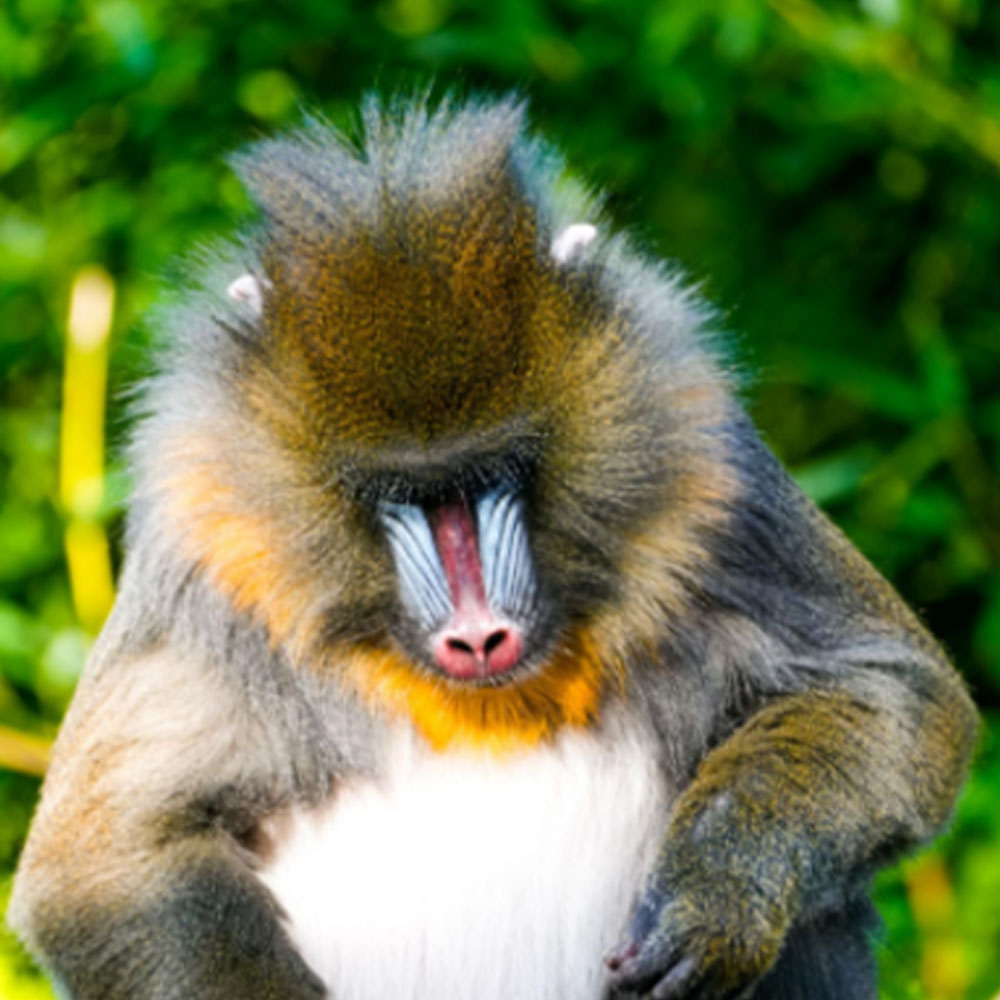
The Mandrill is one of the world’s largest and most colorful primates, easily recognized by the bright blue and red markings on its face and rump.
These powerful, intelligent primates are highly social and are known for their expressive communication, close group bonds, and complex behaviors.
About the Mandrill
Mandrills are native to the rainforests and dense woodlands of Central Africa. Males are significantly larger than females and develop the most vivid coloration as they mature, making them one of the most recognizable primates in the animal kingdom.
Mandrills communicate using facial expressions, body posture, vocalizations, and grooming behaviors. Their colorful markings, intelligence, and social nature make them fascinating animals to observe and learn about.
Animal Facts
| Common Name | Mandrill |
|---|---|
| Scientific Name | Mandrillus sphinx |
| Habitat | Tropical rainforests, forested savannas, and dense woodlands of Central Africa |
| Diet | Omnivore – fruits, seeds, leaves, roots, insects, eggs, and small animals |
| Lifespan | 20 to 30 years |
| Weight | Males can weigh 50–100 lbs; females are usually smaller |
| Length | About 2–3 feet long, not including tail |
| Conservation Status | Vulnerable |
| Park Location | Animal Walkabout |