
Tapir
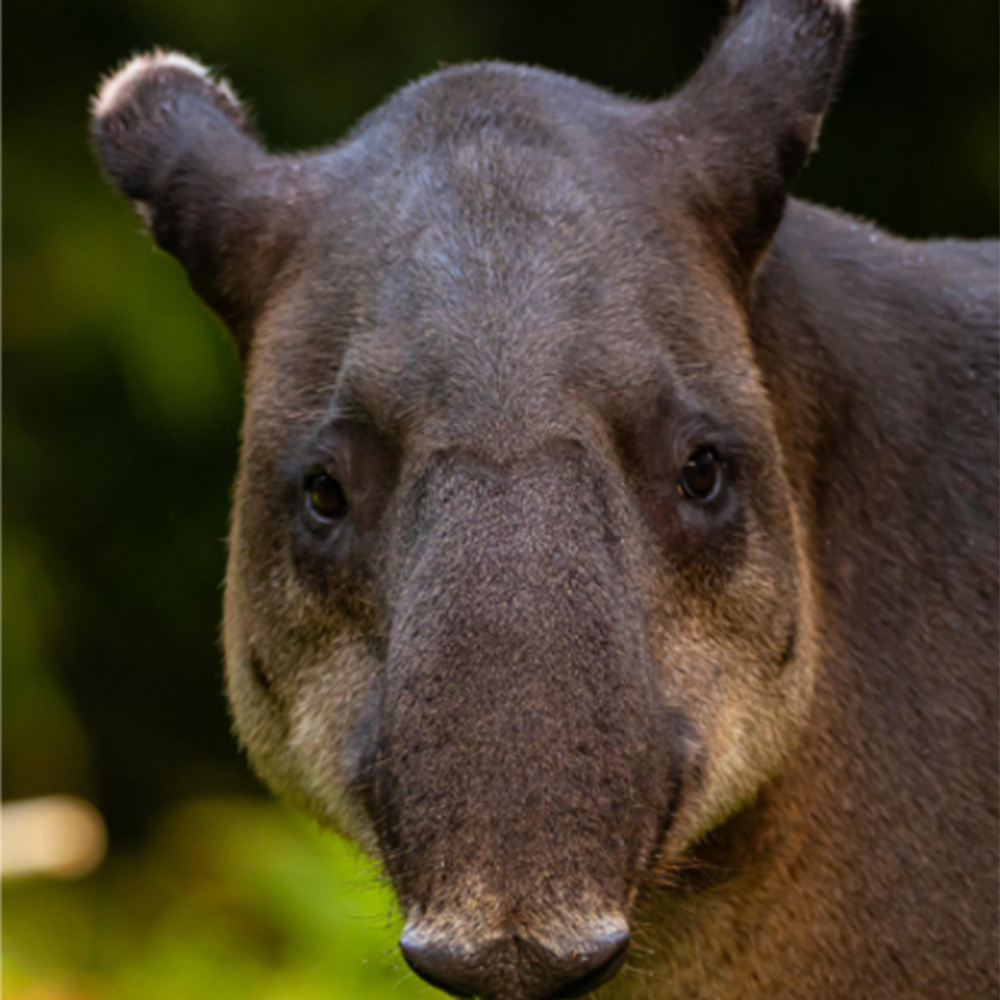
Tapirs are gentle, herbivorous mammals known for their short, flexible snouts that work almost like a tiny trunk. Often called “living fossils,” tapirs have existed for millions of years and are closely related to horses and rhinoceroses.
These quiet rainforest animals are excellent swimmers and love spending time near rivers, ponds, and dense vegetation.
About the Tapir
Despite their large and sturdy appearance, tapirs are surprisingly agile and can move silently through thick jungle terrain while searching for leaves, fruits, aquatic plants, and other vegetation. They rely heavily on their strong senses of smell and hearing to safely navigate their environment.
One of the most adorable facts about tapirs is their babies! Young tapirs are born with brown coats covered in white stripes and spots, helping them camouflage perfectly in the forest understory.
Animal Facts
| Common Name | Tapir |
|---|---|
| Scientific Name | Tapirus terrestris |
| Habitat | Tropical rainforests, wetlands, grasslands, and areas near rivers or ponds in South America |
| Diet | Herbivore – leaves, fruits, aquatic plants, and other vegetation |
| Lifespan | 25 to 30 years |
| Weight | 330–700 lbs |
| Height | About 3–4 feet tall at the shoulder |
| Length | Around 6–8 feet long |
| Conservation Status | Vulnerable |
| Park Location | Animal Walkabout |